How the coastal setback in Indonesia works
Indonesian law protects a strip of land along the coast called the sempadan pantai, or coastal border. Its minimum depth is 100 metres, measured inland from the highest tide point. What can be built inside it is tightly limited.
Local governments set the exact line for their own coasts, and they can make it wider where conditions call for it. So 100 metres is a floor, not a target.
The aims behind the rule are practical:
- protecting coastal ecosystems from damage
- keeping people and buildings further from waves, storm surge and erosion
- keeping the shore open so the public can reach the beach
Measuring 100 metres on a real beach
On paper, 100 metres is a simple number. On a real coast, the starting point matters.
The measurement runs from the highest tide point, not from the water's edge on a calm afternoon. On a gently sloping beach, the high-tide mark can sit a long way up the sand. A survey has to find that line first, and only then can the setback be drawn on the plan.
I'd always rather have that line surveyed properly at the start than argue about it later.
How the coastal setback shapes Saraya
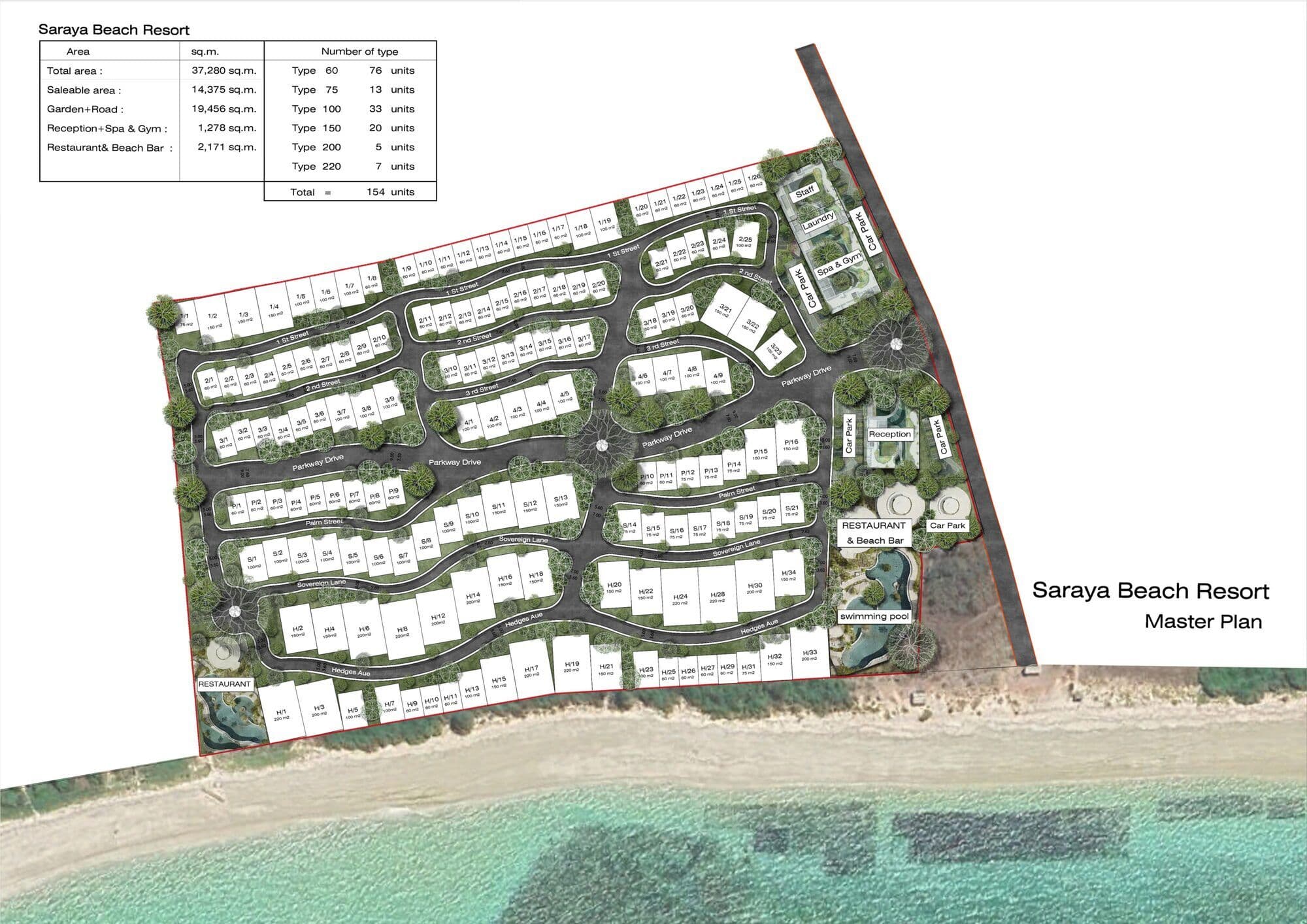
Saraya Beach Resort & Residences is planned as 154 villas on the beachfront in Sekotong, West Lombok. Every building in the master plan is set at least 100 metres from the shoreline, as Indonesian law requires. That applies to every structure, not only the villas.
The whole site measures 37,280 square metres. A little over half of it is given to gardens and roads rather than buildings. That gives the plan room to work with the setback instead of pressing up against it.
My view is simple. A rule like this belongs in the first sketch of a master plan. Trying to squeeze a finished design behind it afterwards produces a worse resort.
What a 100-metre setback means for resort design
Setting buildings back changes how a beach resort works. Four things follow from it.
The beach stays a beach. The sand and the land right behind it aren't covered in buildings. The shoreline can shift with the seasons, as beaches naturally do, without running into a wall.
The walk becomes part of the stay. Guests reach the water through gardens. Good planting and paths turn that walk into something people enjoy rather than a gap to cross.
Views have to be designed. With every building set back, sea views depend on layout, building height and landscaping. It is also part of why the rental pool groups villas by view, which I cover in my note on choosing a hotel operator.
Distance adds a margin of safety. Indonesia's coastlines are exposed to storms, high tides and, in places, tsunami risk. Distance from the water is one of the simplest protections a building can have.
What the setback means for the beach itself
Beaches in Indonesia are meant to stay open to the public, and keeping that access is one of the reasons the setback exists. A resort can look after the land behind the beach, within the rules. It can't treat the shoreline as its own.
That suits me. Saraya's guests will share the beach with local people, and I think that is how it should be. Kinnara Capital's community work around Sekotong starts from the same idea: a village should be better off because a resort arrived, not crowded out by it.
The setback also helps protect the sand. Buildings placed close to the waterline often end up needing sea walls, and hard walls can speed up erosion of the beach in front of them. Keeping construction well back avoids starting down that path.
Why I treat the setback as an advantage
Some developers see a setback as land they can't use. I see it the other way round.
The first 100 metres behind a beach is the reason people travel to the coast at all. Keeping it open protects what gives every villa its appeal, whether it sits in the front row or further back.
It also fits how Kinnara Capital approaches land. We start with clean title and the rules that apply to it, and only then design. On a stretch of coast like Sekotong and Buwun Mas, where land has been put together one parcel at a time, that order matters. The building specification got the same treatment, as I explain in what The Elysian display villa changed. More on the project is on the Saraya website.
This note is general information only. It is not legal or financial advice.