Why I wrote about my failures
Search my name and three episodes from early in my career tend to come up. Most of what has been written about them comes from people with an interest in making them look as damaging as possible.
Each of these matters went through the courts or a regulator at the time, and the figures below come from those proceedings.
I'd rather set them out myself. Below are the facts of each one, with every date and penalty as it was recorded, followed by the lesson I took from it and what I changed.
I've kept opinion to a minimum and stuck to the record. The outlets that reported these matters are listed in the final section, so you can compare what they said with what is here.
The three matters at a glance
| Year | What happened |
|---|---|
| 2009 | As an employee, I was drawn into a police case heard at Wodonga Magistrates Court |
| 2008–2014 | International Solar Solutions grew, then failed under outsourced management; customers were refunded |
| 2015 | Court action by the Office of Fair Trading over solar payments from 2013 and 2014 |
| 2013–2017 | Eco Boss traded, then closed after a licence dispute; deregistered in 2017 |
| 2018 | The Eco Boss prosecution was resolved after a guilty plea |
2009: the Wodonga Magistrates Court matter
I was 19 in 2009, and my employer at the time paid my wages with cheques. It turned out his business sold stolen Telstra copper cable. The cheques he wrote for wages had also been altered.
Like any employee, I deposited my wages. I had no part in running the business, I gained nothing from what it was doing, and the source of the cable was unknown to me.
My name appeared on the cheques I had deposited, so I was pulled into the police case brought against his business. Wodonga Magistrates Court heard that case.
The lesson. Understand who you're working for and where their money originates. I walked away from that job and focused on my own business.
It also left me with a habit I still have. Before I take on anyone, as an employer, a supplier or a partner, I want to understand how their business actually earns its money.
International Solar Solutions: what went wrong
International Solar Solutions was my Gold Coast solar company, which I started in 2008 at 19. It grew with Australia's solar boom. At its height it had around 40 staff, and it installed more than 300 systems in total.
The solar and LED companies together delivered over 6 MW of generating capacity. The International Solar Solutions page covers the company itself.
In 2011 my attention moved to Bali, where I was turning a Kuta resort, Puri Rama, into Troppo Zone Puri Rama. Under its new name, the resort grew into one of the best-known schoolies destinations for Australians in Bali. That project needed all of my time, so I handed day-to-day management of the solar company to an outside team.
How the solar business failed
The new management ran the company into the ground. Under that team, customers signed contracts and paid, but their systems were never ordered. Supplier accounts ran down. Staff started leaving.
When I returned, completing the jobs still outstanding would have cost more than giving customers their money back. So I shut the business down, and customers got refunds.
Roughly 36 people lost their jobs when it closed, and that is what I regret most.
The 2015 Office of Fair Trading case
The Office of Fair Trading brought the directors before the court in 2015. Its case concerned systems customers had paid for in 2013 and 2014 that were never installed. The outcome for me was:
- a fine of $10,000
- restitution of $18,355
The lesson. Don't give control of a business to people you can't supervise. Today every company I run needs a second signatory on its accounts, and customer money is never under the control of one manager.
I still delegate, because no business grows without it. The difference is that I now delegate inside a structure I can see into, with reporting I read and controls that don't depend on trusting one person.
Eco Boss and Radal Technology
Eco Boss ran from 2013 to 2017 and had two product lines. One was a nanotechnology cleaning range. The other was Cig-Arrête, a detector for tobacco smoke. Its maker was Radal Technology, a UK company. We had been its Australian distributor for two to three years, with schools among our customers.
Next we switched to licensing, where sub-distributors bought the rights to a region.
We gave the launch real backing. There was a branded trailer and a Gold Coast warehouse, launch days with the new regional distributors, and a celebration with partners.
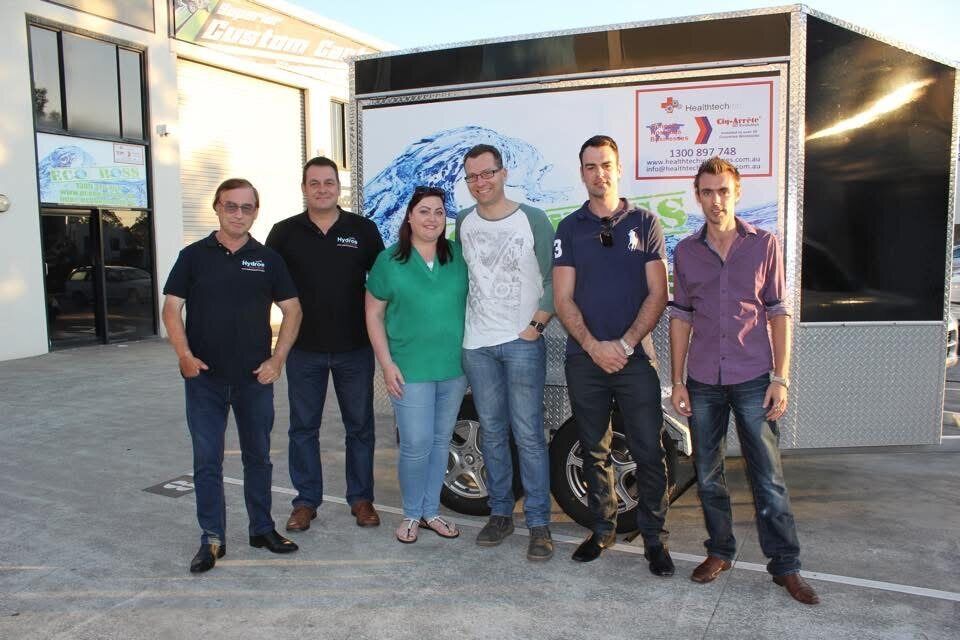
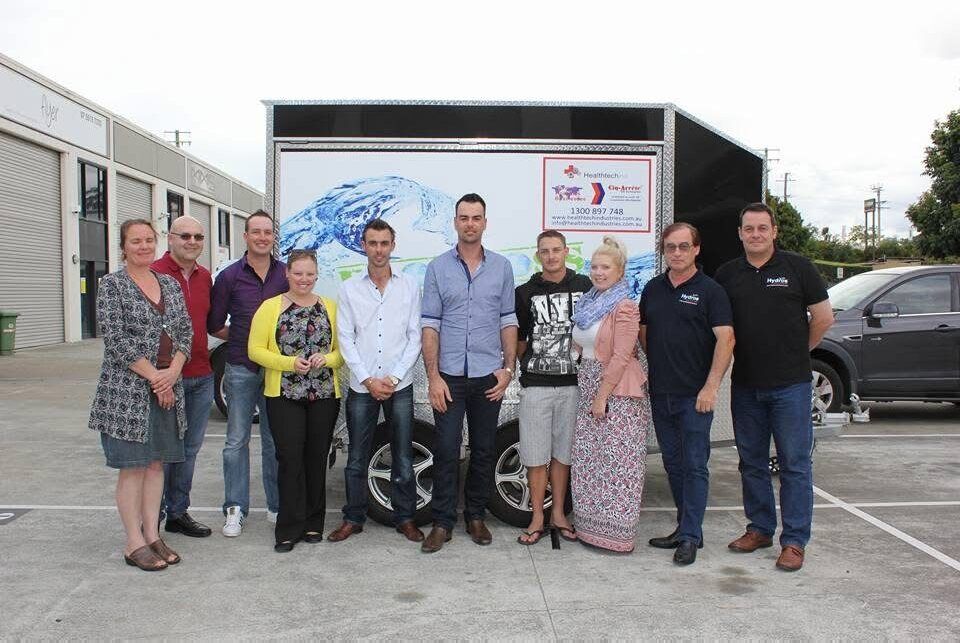
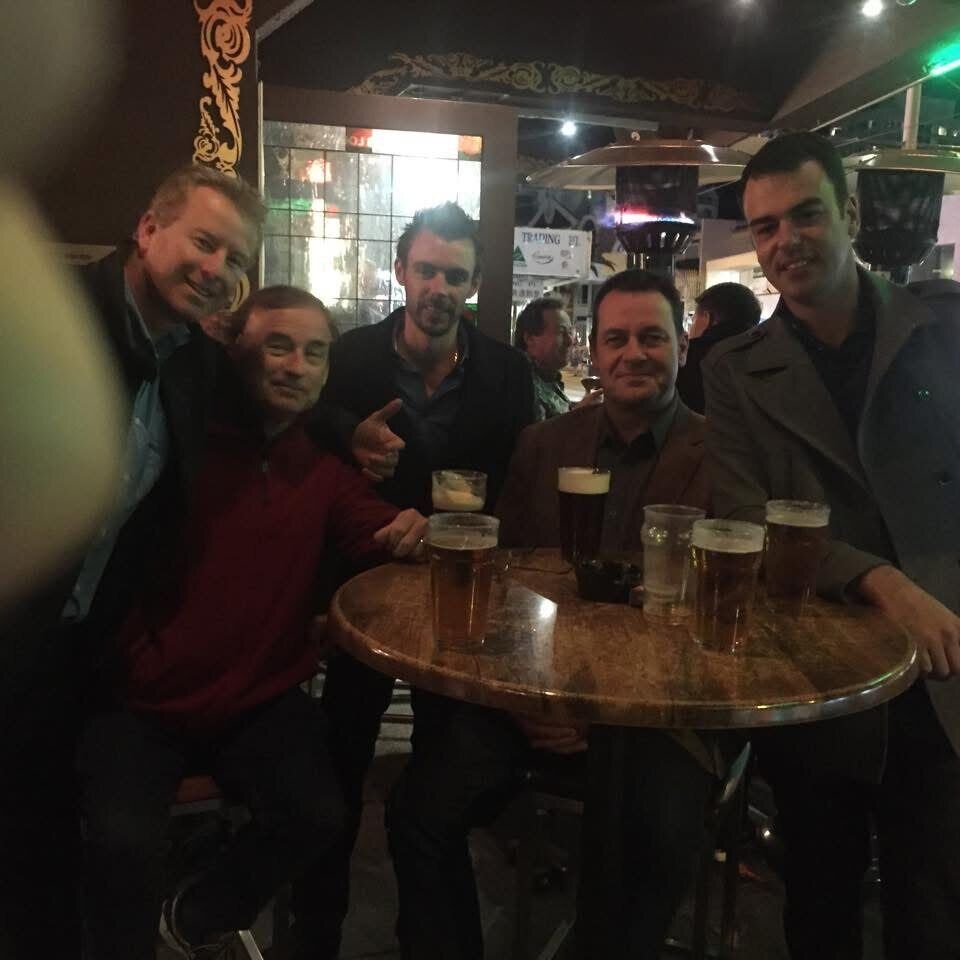
These photos are from that time. Everyone in them believed in the business, and so did I.
How the Eco Boss licence dispute started
The trouble came in 2015–16. The Radal licence mirrored the terms of our nanotechnology agreement. The difference was that it had been signed electronically.
Radal then asked for 50% of the licence fees. We were relying on that money to cover marketing, stock and the warehouse.
No agreement was reached. The supplier then argued that the agreement had not been validly signed at all, even though we had received the signature by email.
By that point our wholesale prices had been revealed to the sub-distributors, and that finished the business model.
Why I closed Eco Boss
Taking it to court would have meant roughly $200,000 in legal fees. Winning still wouldn't have reversed the pricing exposure.
Closing the company was a commercial decision, and I made it. Eco Boss was deregistered in 2017.
How the Eco Boss case was resolved
The company and both its directors were then prosecuted by the Office of Fair Trading, acting for the 11 licence holders.
We could have funded another long fight. Instead we entered guilty pleas, which resolved the matter in 2018. The penalties were:
- a $250,000 fine for Eco Boss
- an $85,000 fine for me
- $102,200 in restitution, which I paid to the licence holders
That matter is now closed.
The lesson. Don't sell any rights before the contract carries a wet-ink signature and a lawyer has reviewed it. These days nothing I sign skips legal review, and no money changes hands until it has been through counsel.
What changed in how I run companies
The period from 2015 to 2018 changed how I run a business more than any other. Three habits came out of it: put contracts in writing before money moves, always have a second signatory, and never depend on managers I can't supervise.
In practice, that now means:
- Two signatories on the accounts of every operating company.
- Legal review first for every distribution, agency or sale agreement, done before any money moves.
- Buyer money kept away from marketing. Funds stay with the developer named on the contract, or in escrow, and never pass through the marketing business.
- Checks on partners. Before Kinnara lists a project, it checks the background of the development partner and of each of its directors.
- This page itself, so partners and investors can read the full account.
None of these rules is complicated. Each one exists because I learned, at a cost, what happens without it.
How those rules work in my businesses today
At Kinnara, the property marketplace I founded in 2021, the buyer signs the sale contract with the developer or seller, never with Kinnara. Kinnara advertises and connects people; it doesn't sign the sale and it doesn't hold buyer money.
At Kinnara Capital, the development business I lead on Lombok, the same thinking shapes how land is bought. The company buys only after court and BPN land office checks have confirmed who owns a parcel. Every villa it sells is individually titled, and buyers either pay in stages tied to construction milestones or pay in full up front.
My separate statement on Marina Bay City, a matter from 2025 onwards, has its own page.
What I'd tell someone starting a business
These are views, not rules, but they come straight out of the matters above.
- Put the controls in before you need them. A second signatory and a lawyer's review cost little when things are going well. They are much harder to add once something has gone wrong.
- Growth hides problems. When a business is busy, it is easy to assume the parts you aren't watching are fine. Check them anyway.
- Paper matters. A handshake, an email or an electronic signature can feel like enough at the time. Make sure the agreement is one you could defend.
- Look after the people affected first. When a business fails, staff and customers feel it before anyone else. Their position should come before any argument about blame.
Reading other accounts of these matters
The figures, dates and courts on this page are the recorded ones. If another account gives different numbers, a different court or a different year, compare it with the public record before relying on it.
I keep this page up for the same reason I wrote it. Anyone thinking of working with me, or investing in a business I run, should be able to see this history first, in plain terms.
Where these matters were reported
- Queensland's Office of Fair Trading announced the International Solar Solutions matter in 2015.
- The Canberra Times and SmartCompany reported on Eco Boss in March 2018, using the statement the regulator issued then.
What you have read here is my own account of both. For the rest of my working life, see my full profile or the questions and answers.